Nail rhinestones and charms can transform a manicure, but a bag of sparkling decorations does not tell you how the set will look or feel. Shape, height, backing and placement matter as much as color. Use this guide to compare nail-art details and prepare questions for your artist before buying supplies or booking a heavily embellished set.
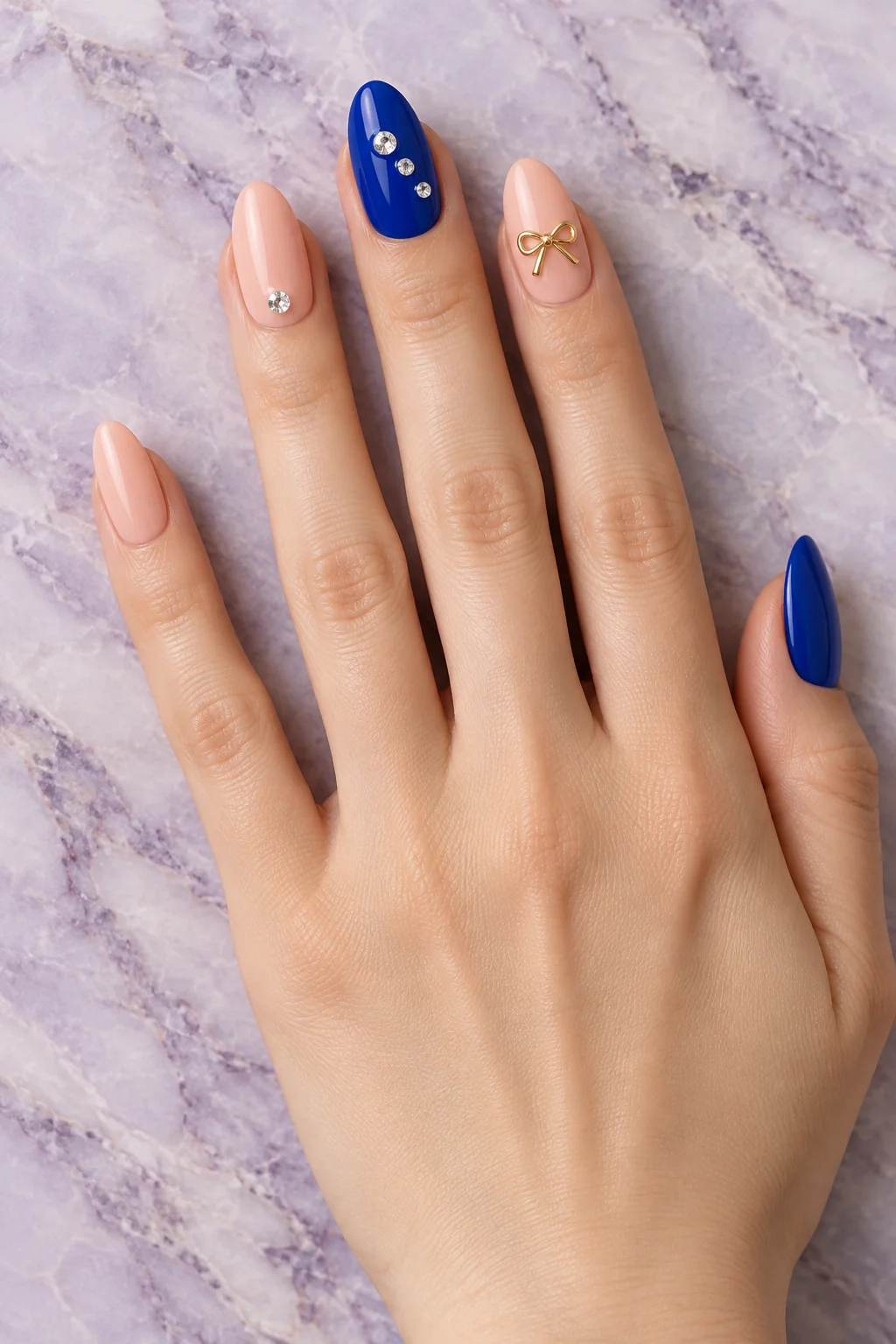
This is an editorial selection guide, not a tested product ranking. We have not measured these materials for durability or verified a particular brand’s safety. No purchase is needed to use the planning method below.
Understand nail rhinestones before comparing listings
| Detail | What the name describes | What to check |
|---|---|---|
| Flatback rhinestone | A faceted decorative piece with a relatively flat underside | Actual dimensions, height, material and whether its base suits the intended nail product |
| Pearl or half-pearl | A rounded pearl-effect accent, sometimes with a flat base | How far the dome projects and whether the finish tolerates the chosen system |
| Shaped crystal | A decorative shape such as a teardrop, heart or marquise | Pointed ends, width and orientation on the nail |
| Metal or sculpted charm | A dimensional motif such as a butterfly, bow or fruit | Underside fit, protruding edges, height and an appropriate removal plan |
| Painted or foil effect | A visual detail without a separate large ornament | Whether it gives enough contrast to preserve the idea at a lower profile |
“Crystal,” “gem” and “jewel” are often appearance descriptions in nail inspiration. Do not infer that a decoration is a natural gemstone, lead-free, hypoallergenic or salon-grade from a photograph or a glamorous name. Check the actual supplier information.
Measure the design against your nail
Look for dimensions in millimeters instead of relying on a close-up image or a size code alone. Compare the piece with the usable width of your nail, leaving visual space around it. A wide heart may dominate a short nail even when it appears small in a mixed-size box. A slim teardrop can look less crowded, but its point may still project awkwardly depending on placement.
For planning, trace a rough nail outline on paper and mark the proposed ornament at its stated size. This does not test adhesion or fit. It simply makes scale easier to judge before you order a large assortment. Let your nail artist decide whether the real piece sits appropriately on your nail’s curve.
Choose one focal detail, then supporting details
When choosing nail rhinestones, start with the element you would miss if it were removed: a blue butterfly, a ruby center stone or a crystal French edge. Give it one feature nail in your first sketch. Repeat its color elsewhere using polish or small accents rather than copying the entire cluster across ten nails.
For example, an emerald-and-berry set can use an emerald focal stone, berry polish on the remaining nails and a thin green French tip. Adding pearls, bows and several metal colors may make the original contrast harder to read. More detail is a design choice, not an automatic improvement.
Tools have separate jobs
A small sorting tray keeps nail rhinestones and other loose pieces visible while planning. A pickup pencil or appropriate tweezers helps position decorations; neither attaches them. A fine brush is useful for painted lines, but it does not replace training in product application. Keep containers labeled so different materials and sizes remain identifiable.
Adhesive selection is a separate decision. Ask which product is intended for the decoration, the nail coating and the removal method. Do not substitute household glue or assume that a thicker layer makes a larger charm suitable. Follow the manufacturer’s instructions, including any professional-use restriction and any specified curing system. This guide intentionally does not provide universal lamp times or an adhesive recipe.
A useful buying checklist
- Can I identify the seller, material and dimensions?
- Is there a clear description of what the package contains?
- Are instructions and warnings available for any chemical product?
- Has my artist agreed to use client-supplied decorations?
- Can the design be simplified using materials already available at the salon?
- Do I understand how the finished set will be removed?
The FDA’s nail-product guidance explains why labels, warnings and avoiding inappropriate skin contact matter. Its guidance does not certify the decorative pieces in a marketplace listing. Stop using a product that causes a reaction and seek qualified advice.
Try the selection method on a real idea
Open our butterfly nail design guide and choose one wing shape, one main color and one level of dimension. Or take a color pairing from our rhinestone French tips and replace a raised cluster with two small accents. Use the images as a conversation starter rather than proof that a material combination has been tested.
After choosing your nail rhinestones and other details, read our rhinestone nail aftercare guide to plan for comfort, loose accents and removal.
See scale choices in context: our short gem nail designs compare one clear crystal, a small pair and a pearl-style accent. Use the decoration dimensions as a discussion point rather than assuming a photographed piece will fit your nail.